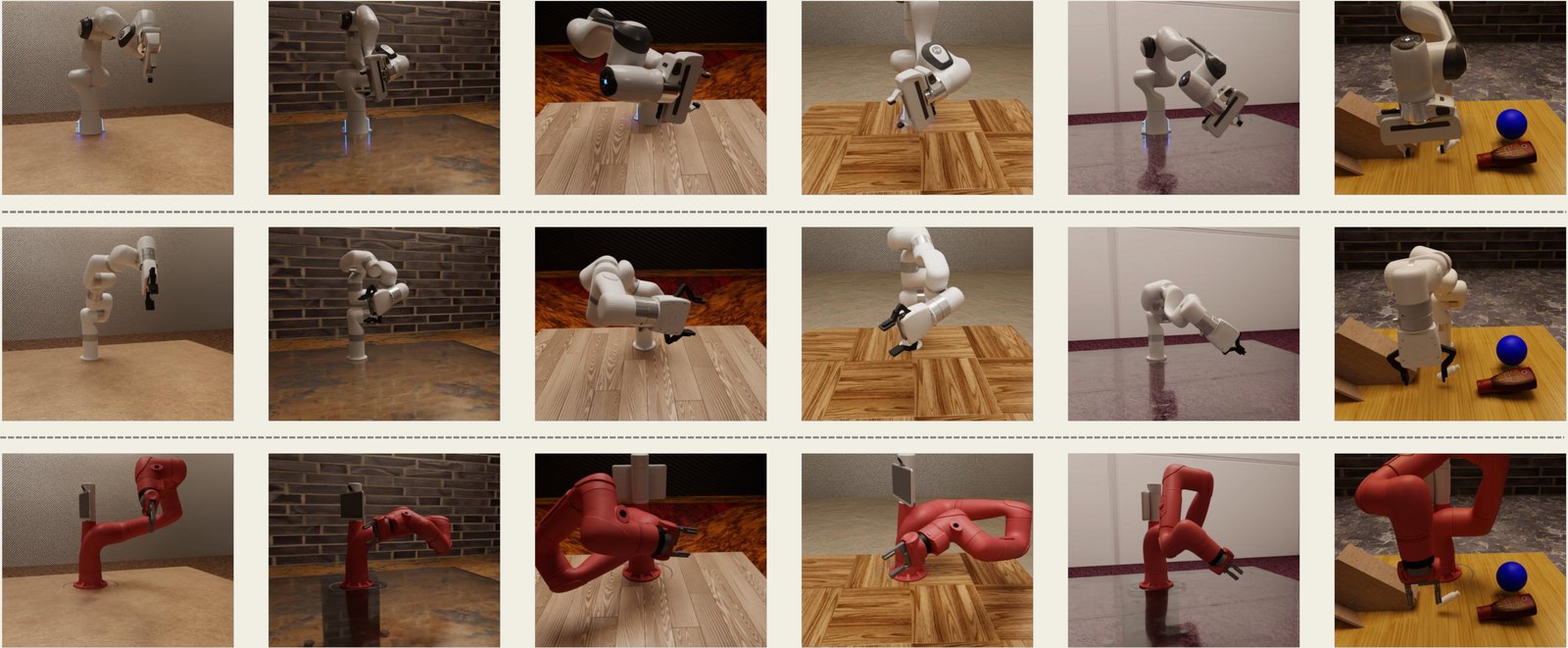
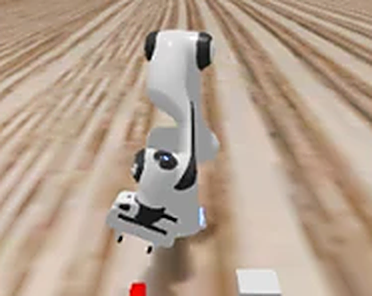
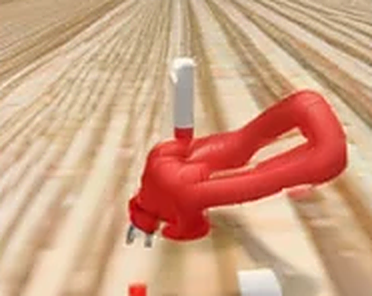
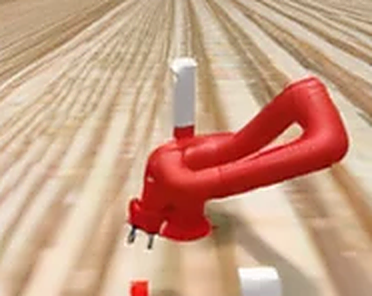
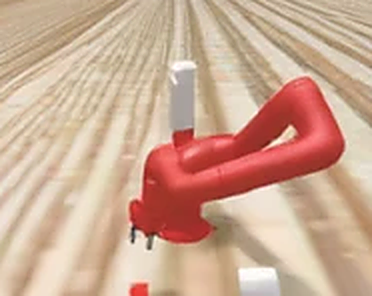
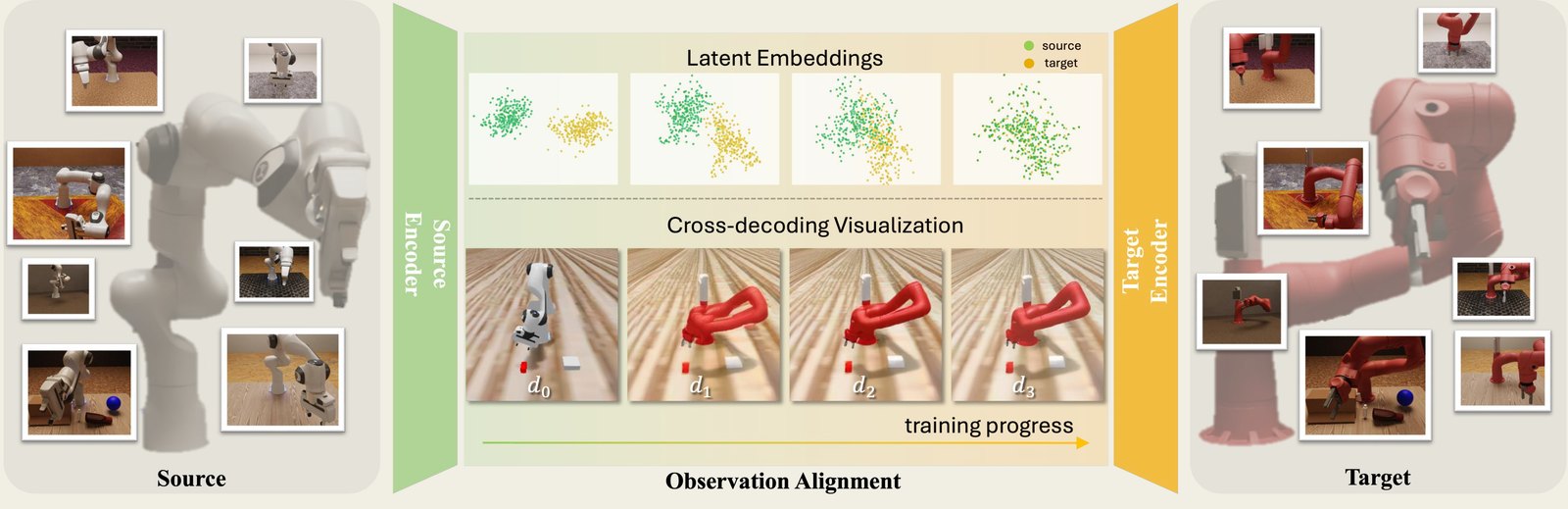
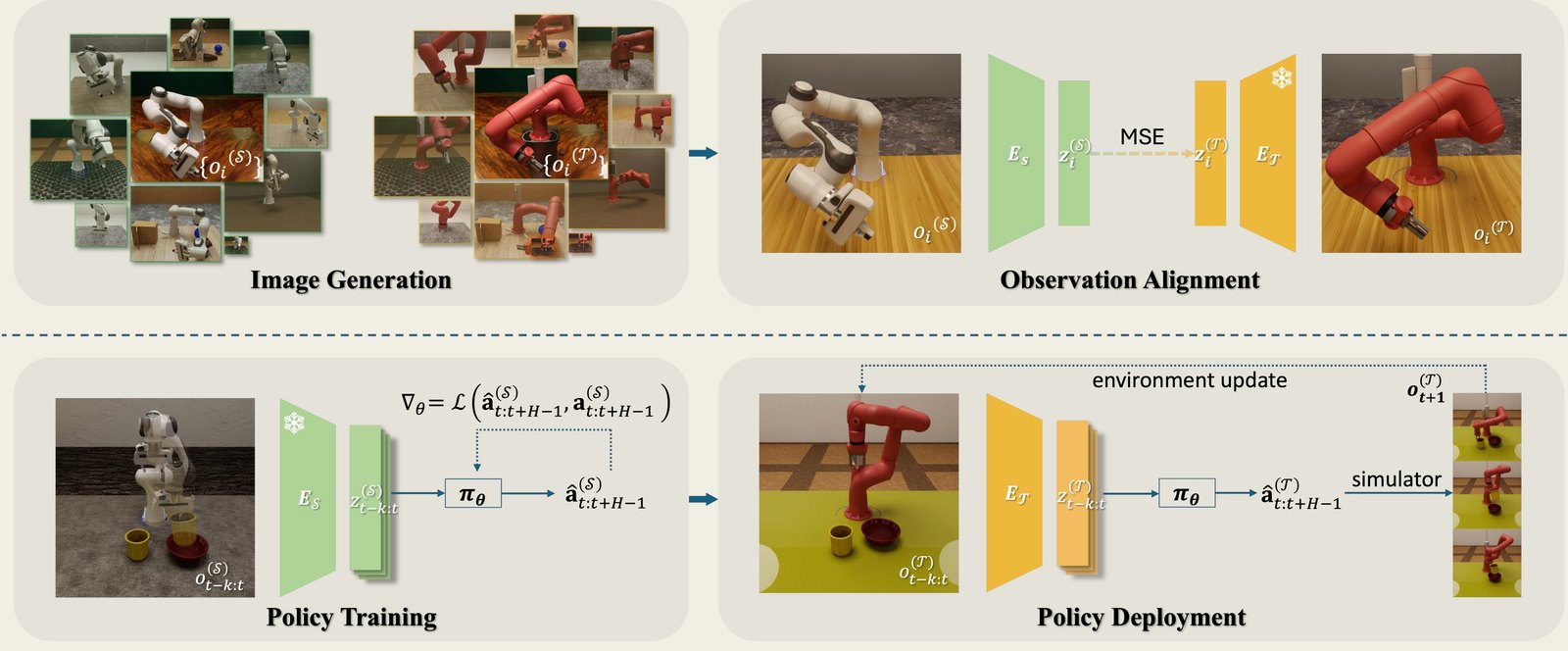
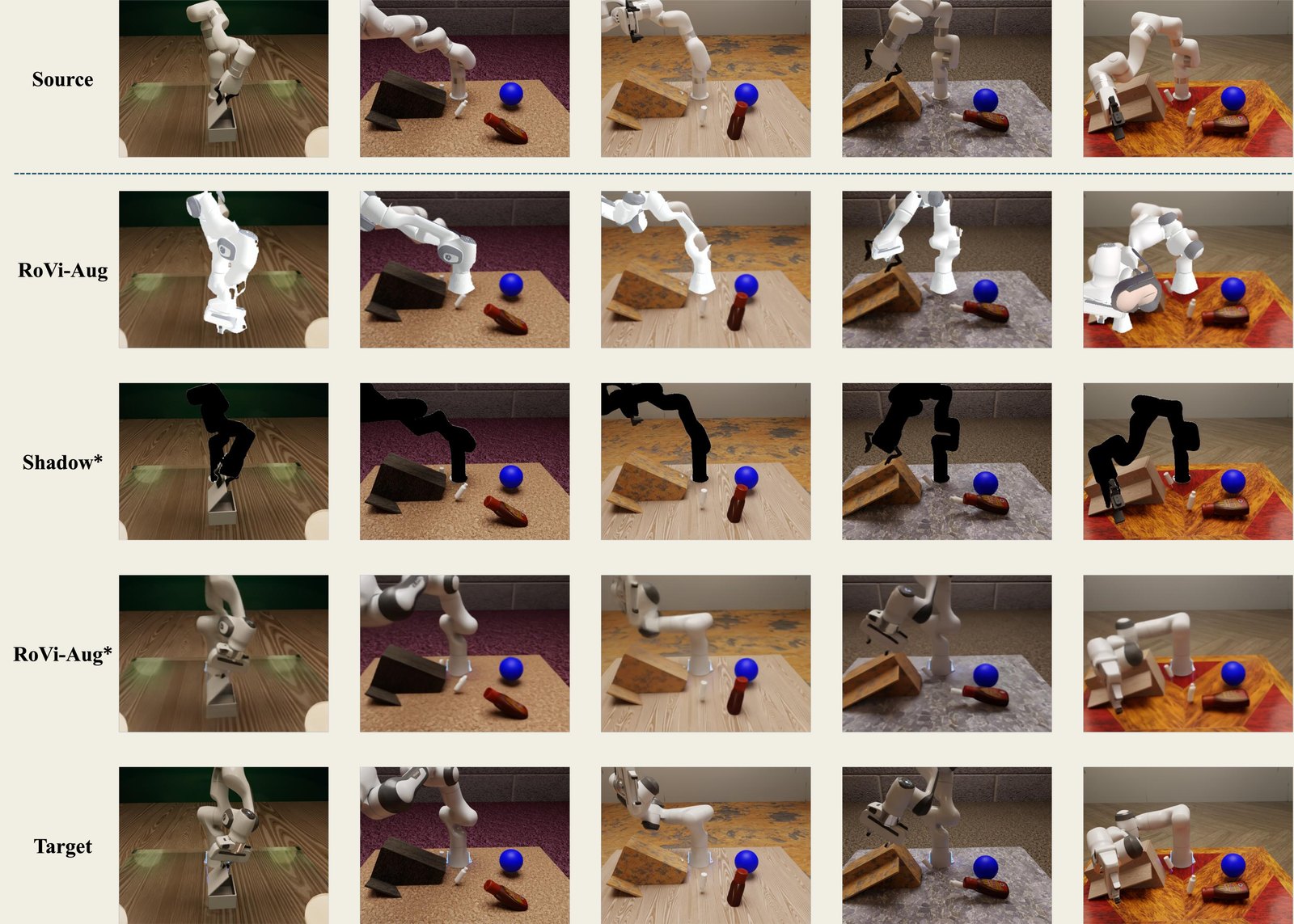
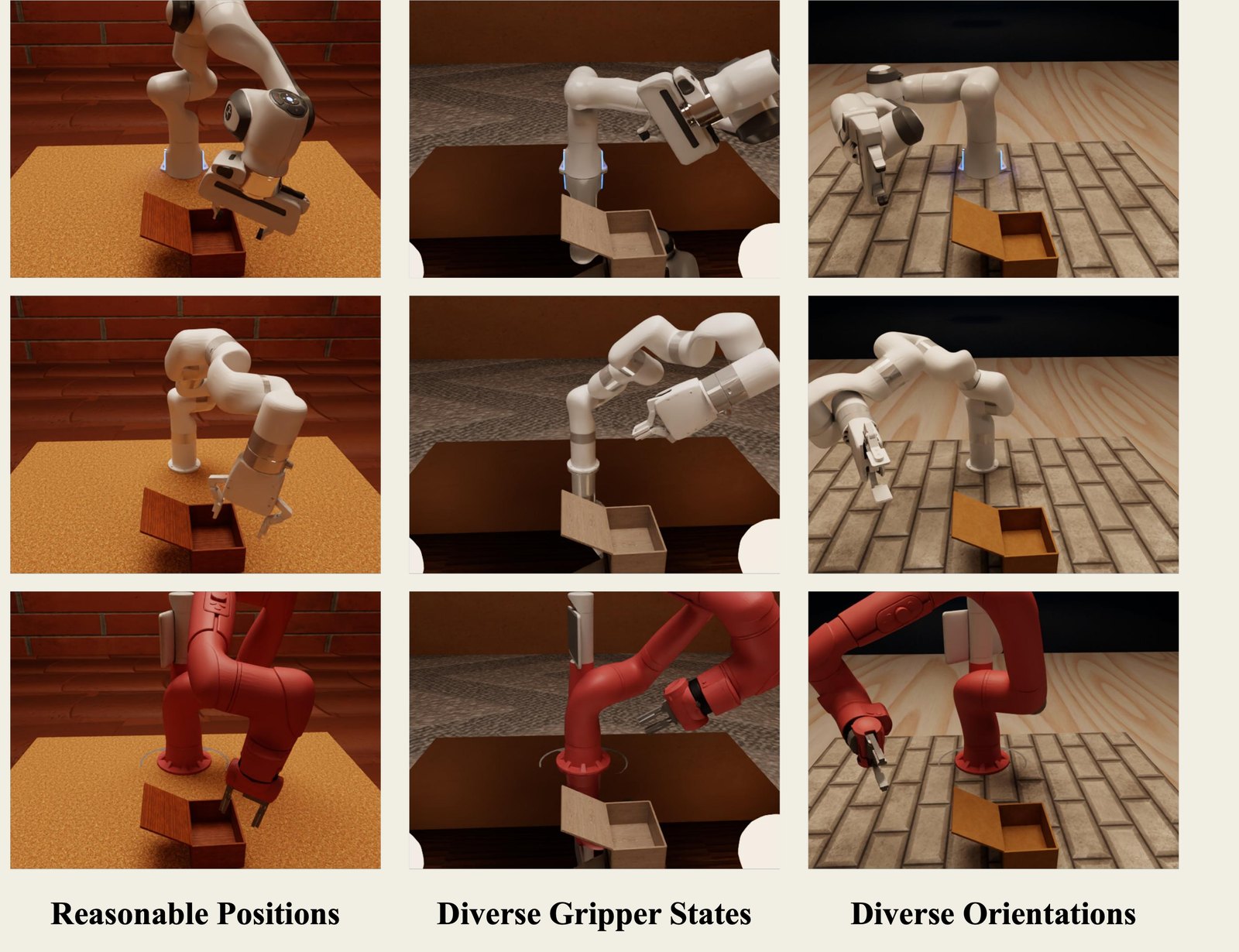
Align observations. Each pair shows two robots at the same tool-center-point pose, from the same camera in the same randomized scene. ES is trained with an MSE loss on CLS and patch tokens to output, for the source image, the features the frozen ET gives the target image. After training, both images of a pair map to the same representation.
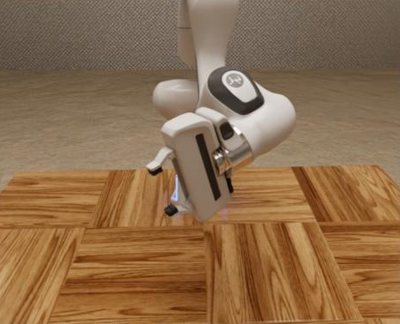
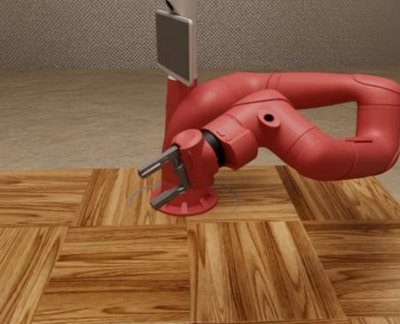
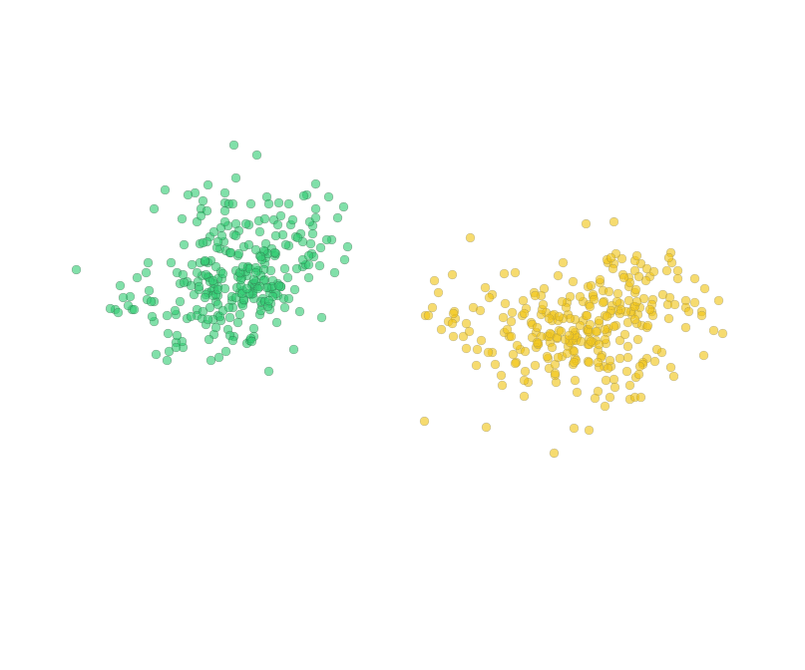
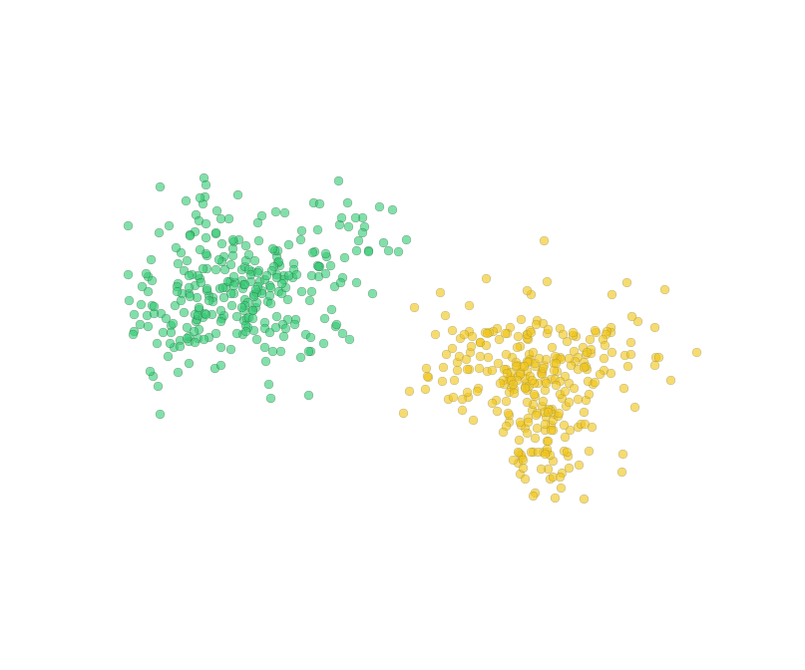
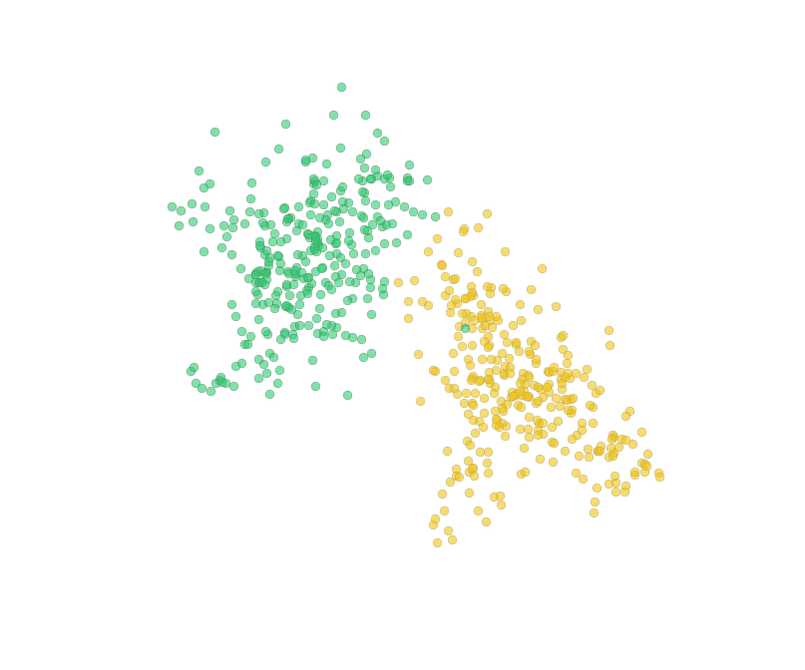
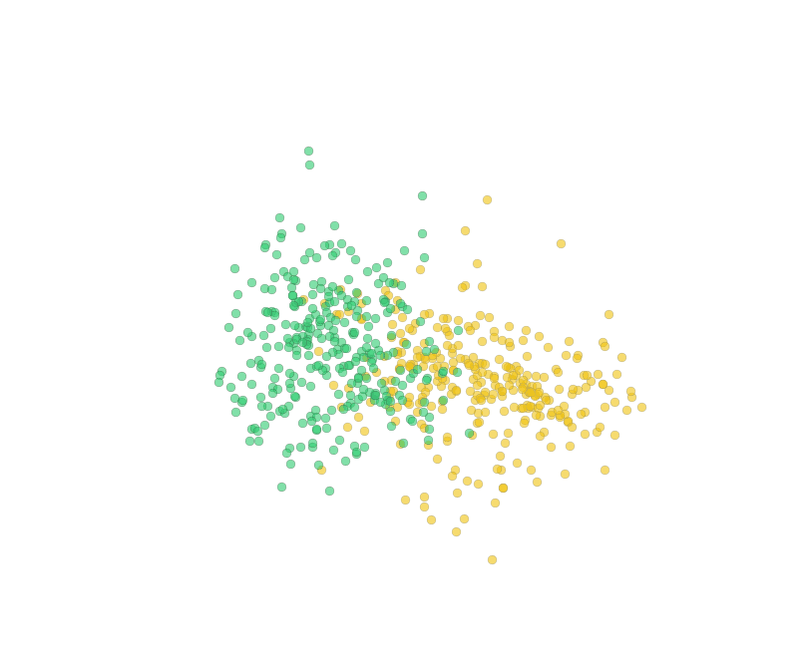
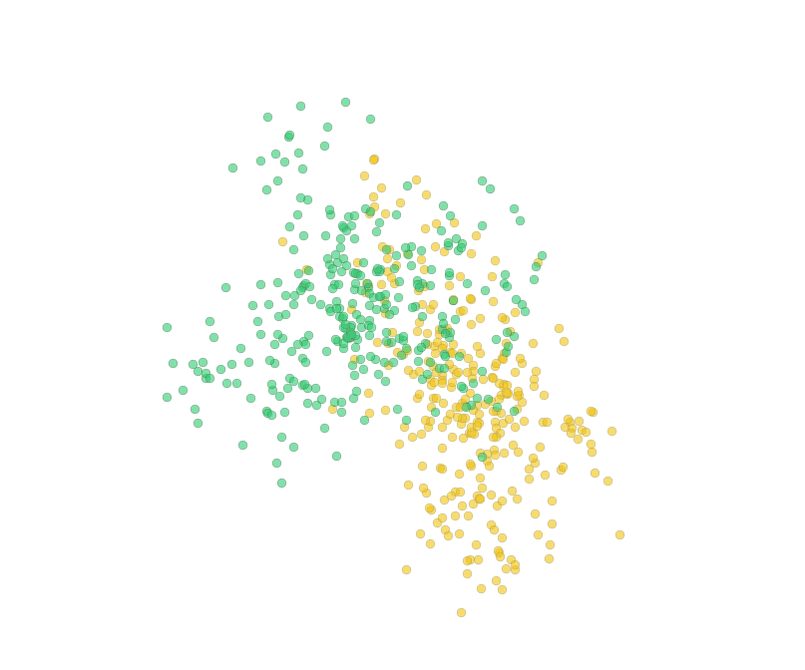
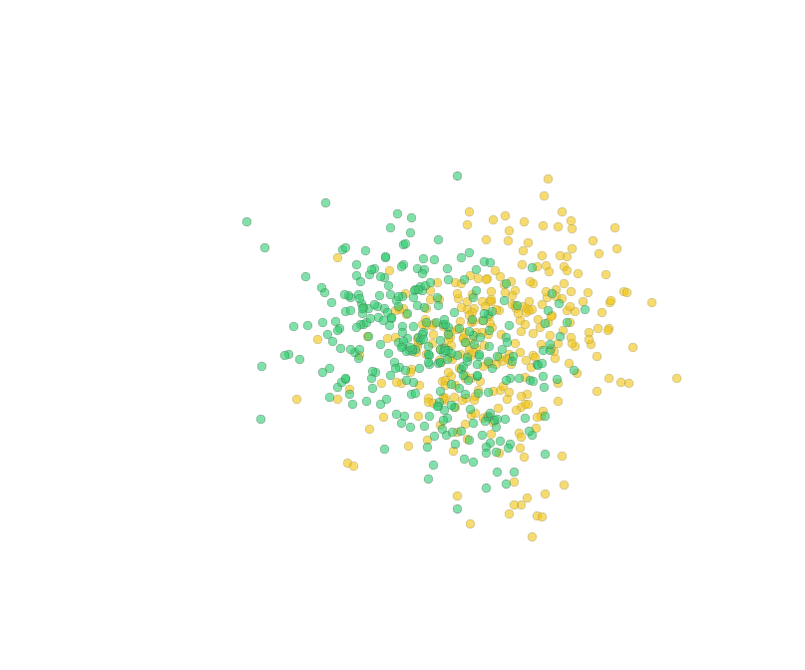
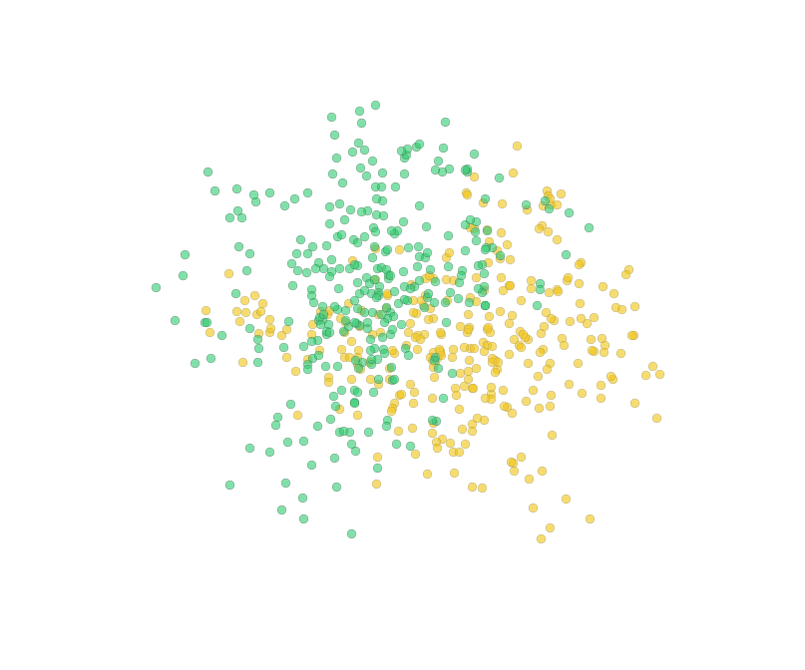
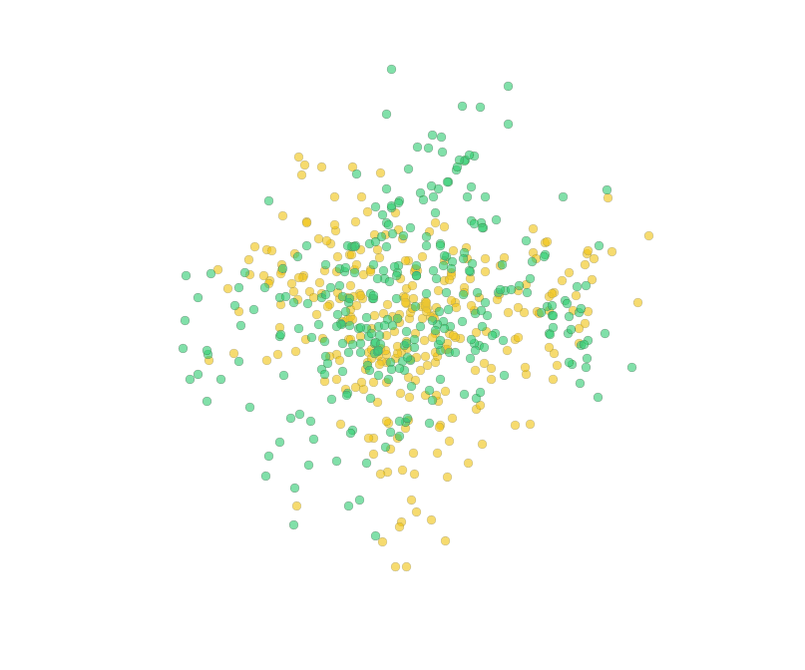
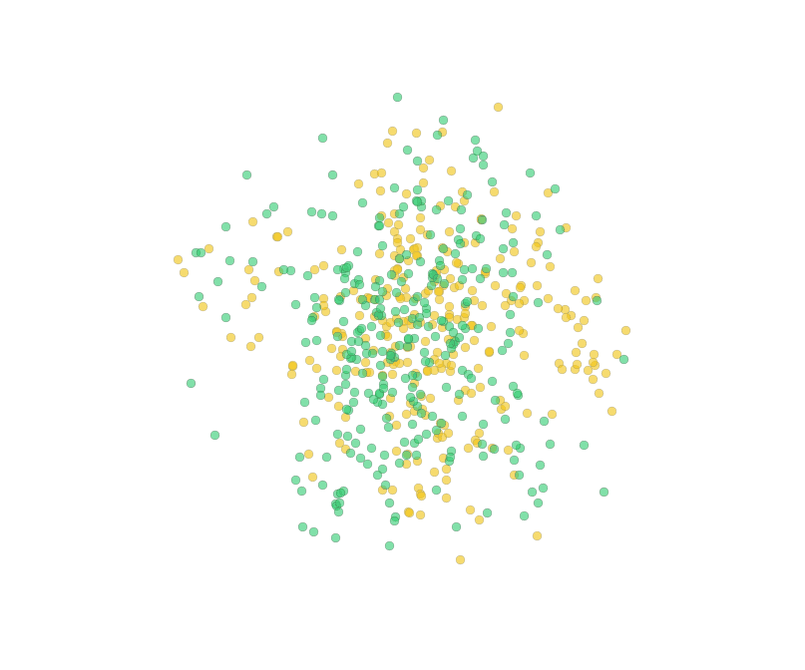
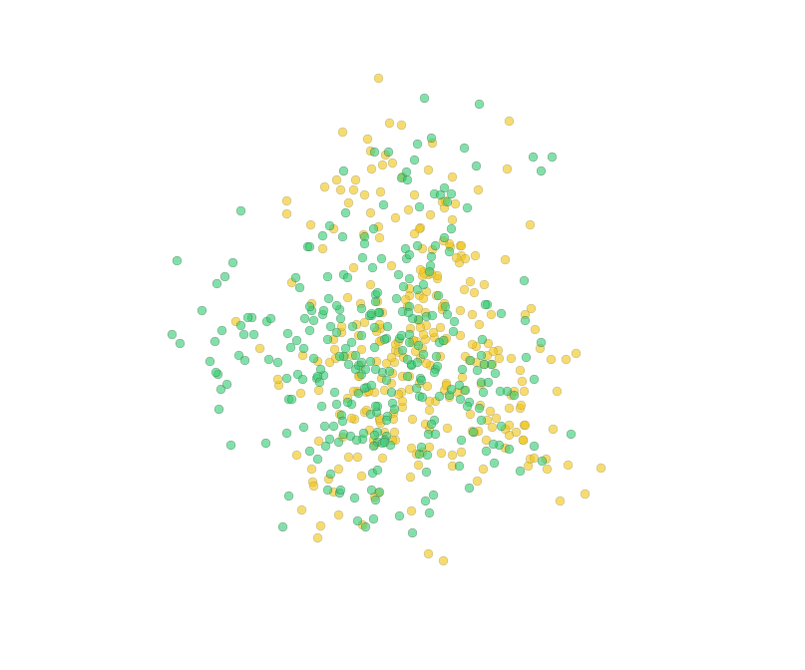
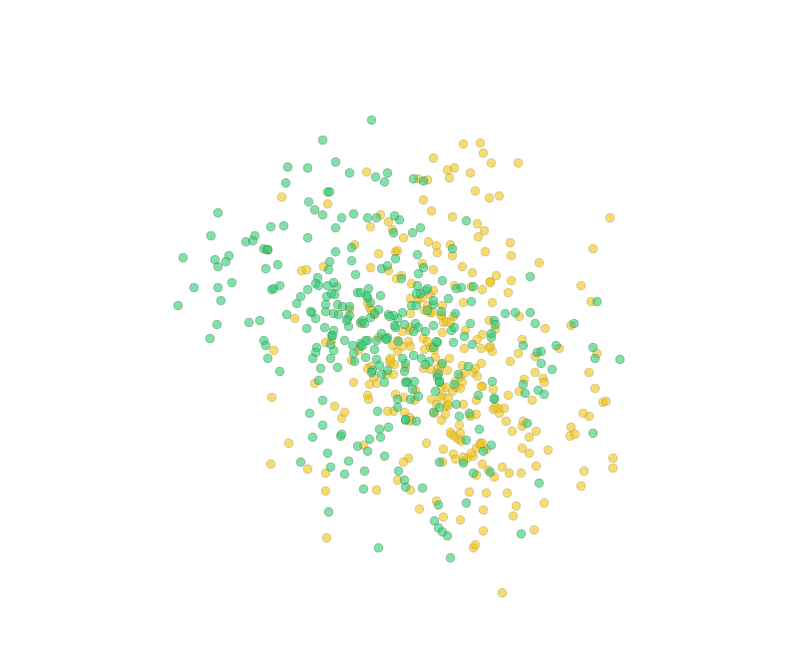
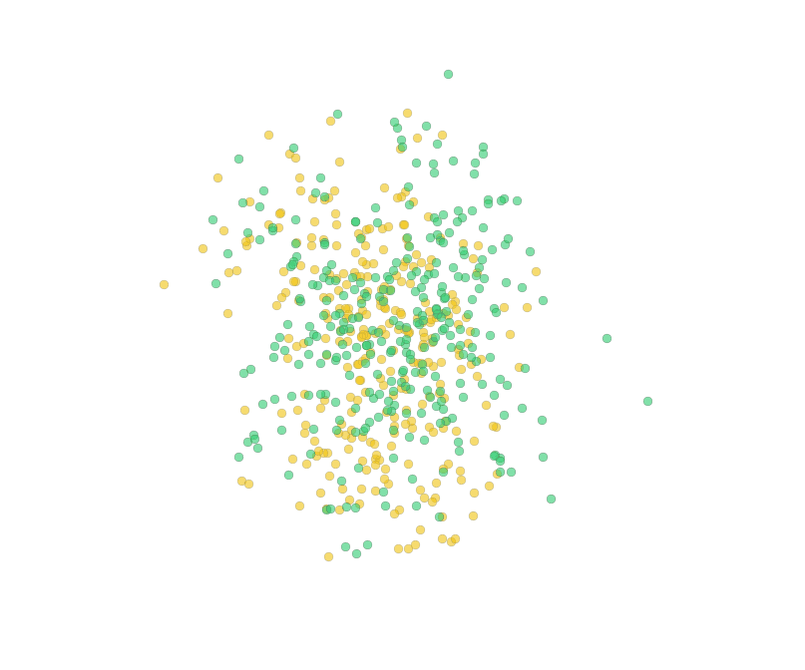
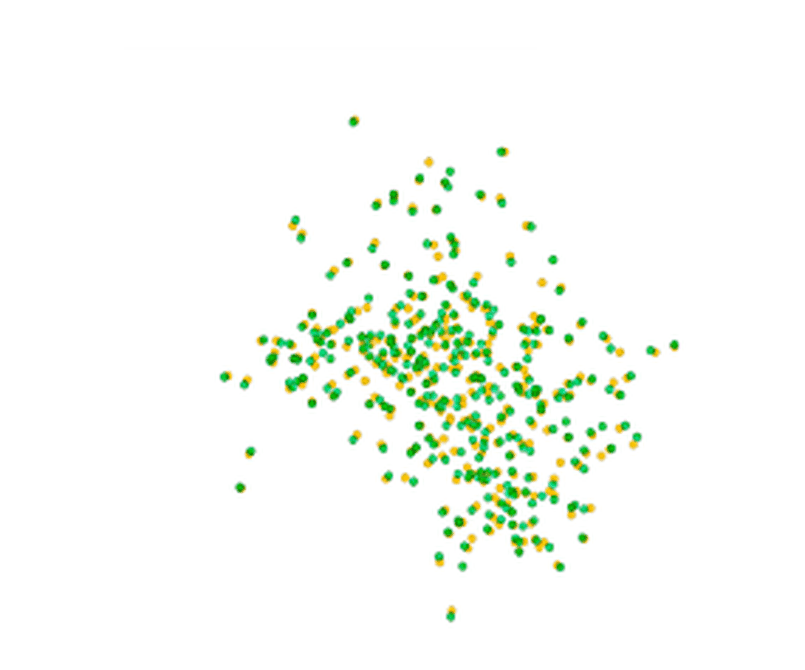
Alignment over training. Left: t-SNE of Franka (source) and Sawyer (target) embeddings of paired renderings during alignment training. The two embodiments start as separate clusters, merge, and end with each Franka point on its paired Sawyer point. Right: decoding aligned Franka features back to pixels shows an increasingly Sawyer-like robot, a visual check that ES now encodes the target embodiment. The policy never uses these images.
Train the policy. Source demonstrations are encoded with the aligned ES, now frozen. A flow-matching policy learns to predict chunks of 8 end-effector actions (position, orientation, gripper) from the last 3 latent observations. It trains on target-aligned features, never on pixels.
Deploy on the target. The target robot’s camera images go through the frozen ET, the encoder that defined the alignment, and the same policy acts on them in closed loop. No image is translated or generated at test time.